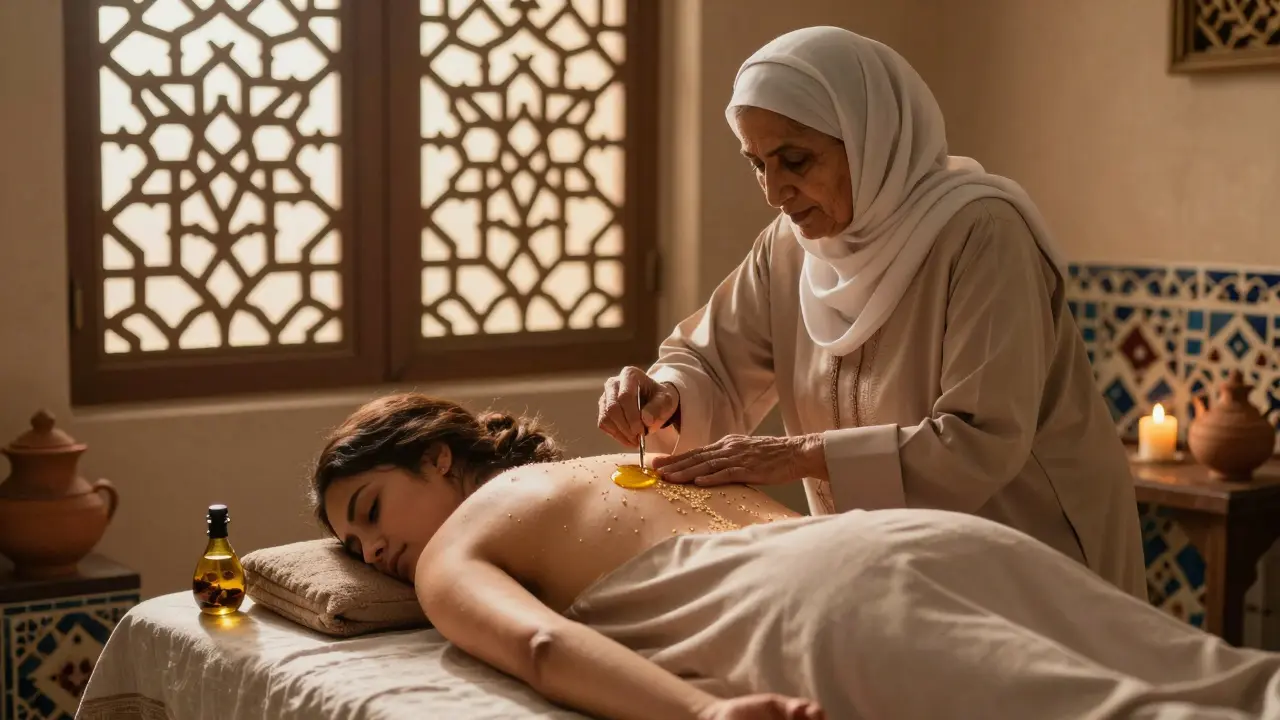
When you think of Abu Dhabi, you might picture skyscrapers, luxury hotels, or desert safaris. But beneath the modern surface lies a quiet, ancient history of touch, healing, and intimacy-much of it tied to what some now call sex massage. This isn’t about entertainment or exploitation. It’s about how the body, pleasure, and care have been understood in this part of the world for centuries.
Before the Oil Boom: Touch as Medicine
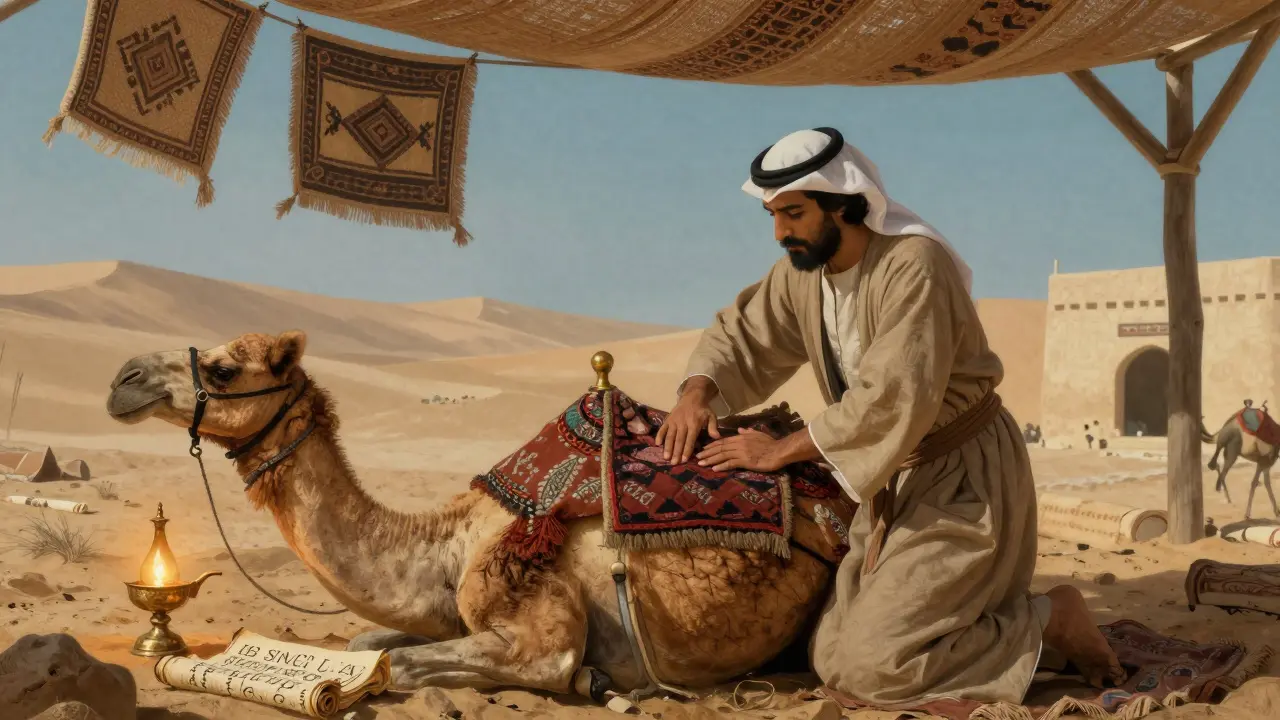
Long before Abu Dhabi became a global city, its people relied on natural remedies passed down through generations. Bedouin tribes, coastal fishermen, and desert traders all used massage not just for relaxation, but for pain relief, circulation, and recovery from hard labor. These weren’t clinical sessions. They were intimate, private, and often performed by family members or trusted healers.
Women in particular were known to use warm oils-like sesame, almond, and frankincense-to soothe muscle tension after long days carrying water or weaving mats. Men, especially those who rode camels or worked in pearl diving, received deep pressure strokes to ease joint pain. These techniques weren’t labeled as "sex massage," but they often involved full-body contact, sensitive areas, and a deep awareness of bodily energy. In a culture where nudity was private and not sexualized, touch was simply part of care.
The Influence of Islamic Medicine and Persian Traditions
By the 9th century, Islamic scholars in the region were studying Greek, Persian, and Indian medical texts. One of the most influential was Ibn Sina (Avicenna), whose Canon of Medicine included detailed chapters on therapeutic touch. He wrote that "the hand that kneads the body with warmth and intention can restore balance better than any herb."
These ideas traveled along trade routes from Persia and India into the Gulf. Persian massage techniques, which included slow, rhythmic strokes and pressure on energy points, became part of local healing rituals. Some of these methods focused on the lower back, hips, and thighs-not because they were sexual, but because they were areas where tension built up from riding, labor, or sitting for long prayers.
There was no stigma around these practices. In fact, royal courts in the region had dedicated healers who used massage as part of daily wellness. Records from the 18th century mention royal women receiving weekly oil massages from trained attendants. These sessions were private, quiet, and focused on health-not arousal.
Colonial Misunderstandings and the Birth of Misconceptions
When European travelers arrived in the 19th century, they didn’t understand the cultural context. To them, any full-body massage involving oil, skin contact, or focus on the hips and thighs looked like something "indecent." They called it "Turkish massage" or "Oriental massage," and the term "sex massage" began to creep into Western travelogues.
These labels stuck. By the 1920s, British colonial officials in the Gulf started banning certain massage practices, claiming they were "immoral." But locals continued them in secret. Families kept the knowledge alive. Healers moved underground. The real tradition didn’t die-it just went quiet.
Modern Abu Dhabi: From Silence to Reclamation
After oil wealth transformed Abu Dhabi in the 1970s, the city imported Western spa culture. Luxury hotels brought in Swedish and Thai massage therapists. But many of these therapists had no idea about the region’s own healing history. They didn’t know about the old oil blends, the pressure points used by Bedouin healers, or the spiritual intent behind certain strokes.
Then, in the early 2000s, a few local wellness practitioners began researching their own heritage. They interviewed elders, dug through old family journals, and even found records in the Abu Dhabi Cultural Foundation archives. What they discovered was startling: many of the techniques used in modern "sensual" spas were actually echoes of traditional healing methods.
One practitioner, Fatima Al Muhairi, started offering "Heritage Touch" sessions in 2012. She used the same oils her grandmother had, the same slow rhythm, the same focus on the body’s natural energy flow. She didn’t call it "sex massage." She called it "restorative touch." And slowly, people began to understand.
What’s Different Today?
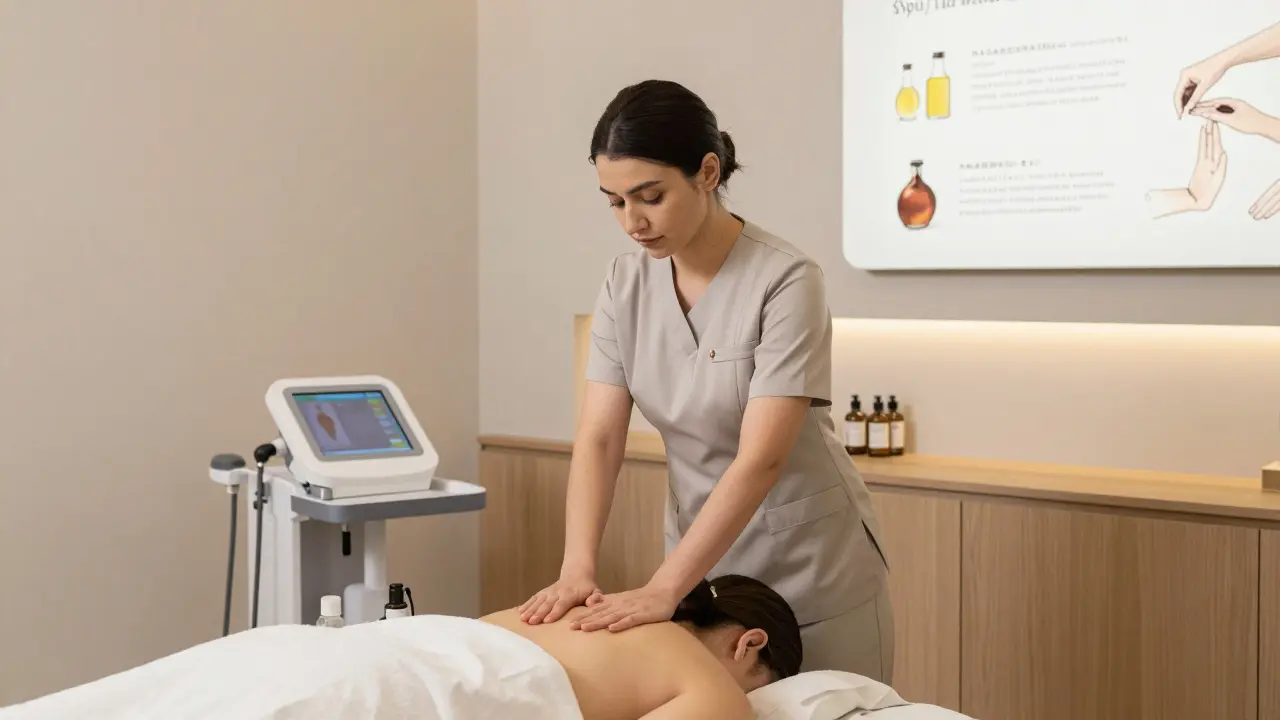
Now, in 2026, you can find places in Abu Dhabi that offer massage with sensual elements-but they’re not the same as what you’d find in a nightclub district. These are licensed wellness centers, staffed by trained therapists who study both modern anatomy and traditional techniques. They use medical-grade oils, follow strict hygiene codes, and never cross boundaries.
The key difference? Modern sessions focus on nervous system regulation, stress reduction, and muscle recovery. They’re backed by research. A 2023 study by the UAE Ministry of Health found that clients who received culturally informed massage reported 40% greater reduction in chronic pain than those who got standard Swedish massage.
And the old techniques? They’re still here. If you ask an elder in Al Ain or Liwa, they’ll tell you: "The hand that heals with love doesn’t need to be sexual to be powerful. It just needs to know the body."
Myths vs. Reality
- Myth: Sex massage in Abu Dhabi is about erotic service. Reality: It’s about restoring balance. The focus is on healing, not stimulation.
- Myth: It’s illegal or hidden. Reality: Licensed wellness centers operate openly under UAE health regulations.
- Myth: It’s a recent Western import. Reality: It’s a revival of ancient Gulf healing traditions.
- Myth: Only men offer it. Reality: Female practitioners are the most respected, especially in traditional settings.
Why This Matters Now
Abu Dhabi is trying to become a global hub for wellness tourism. But if it only offers imported therapies, it loses its soul. The real value isn’t in luxury candles or rose quartz. It’s in knowing how your ancestors healed themselves-with oil, with patience, with deep respect for the body.
Today, young Emiratis are learning these techniques again. Universities are adding traditional massage to their health sciences programs. The Ministry of Culture has even started documenting the old oil recipes and hand movements.
This isn’t about sex. It’s about memory. It’s about reclaiming a part of identity that was misunderstood, silenced, and nearly lost.
Is sex massage legal in Abu Dhabi?
Yes-but only when offered by licensed wellness centers that follow UAE health and hygiene regulations. Any service involving sexual activity is strictly illegal. The legal system distinguishes between therapeutic touch and sexual services. Licensed centers must have certified therapists, medical-grade facilities, and clear boundaries. Many now include training in cultural heritage practices.
Are there female practitioners of traditional massage in Abu Dhabi?
Absolutely. In fact, female practitioners are the most trusted in traditional settings. Historically, women passed down massage knowledge through generations, especially for reproductive health, postpartum recovery, and chronic pain. Today, many of the leading wellness centers in Abu Dhabi are run by Emirati women who trained under elders. Their approach is calm, precise, and deeply rooted in cultural respect.
What oils are traditionally used in Abu Dhabi massage?
The most common oils are sesame, almond, and olive, often blended with frankincense, myrrh, or rose. These were chosen for their anti-inflammatory properties and calming scent. Frankincense, in particular, was used by royal families for its ability to soothe nerves and improve circulation. Modern centers still use these blends, sometimes with added lavender or chamomile for therapeutic effect.
Can tourists experience traditional massage in Abu Dhabi?
Yes. Several licensed wellness centers offer "Heritage Touch" sessions designed for visitors. These are not erotic services-they’re educational and therapeutic. Sessions include a short explanation of the history, a demonstration of technique, and a 60- to 90-minute treatment. Booking requires advance notice, and clients are screened for medical conditions. Many tourists say it’s one of the most meaningful experiences they’ve had in the UAE.
How is this different from massage in Dubai or other Gulf cities?
Abu Dhabi’s approach is more conservative and historically grounded. While Dubai leans toward luxury and trend-driven spas, Abu Dhabi has focused on preserving and reviving local traditions. The techniques are slower, the settings quieter, and the emphasis is on healing rather than indulgence. Many therapists in Abu Dhabi have formal training in both modern physiotherapy and ancestral practices-a combination rarely found elsewhere in the region.

Write a comment