Monaco doesn’t sleep-it just changes outfits.
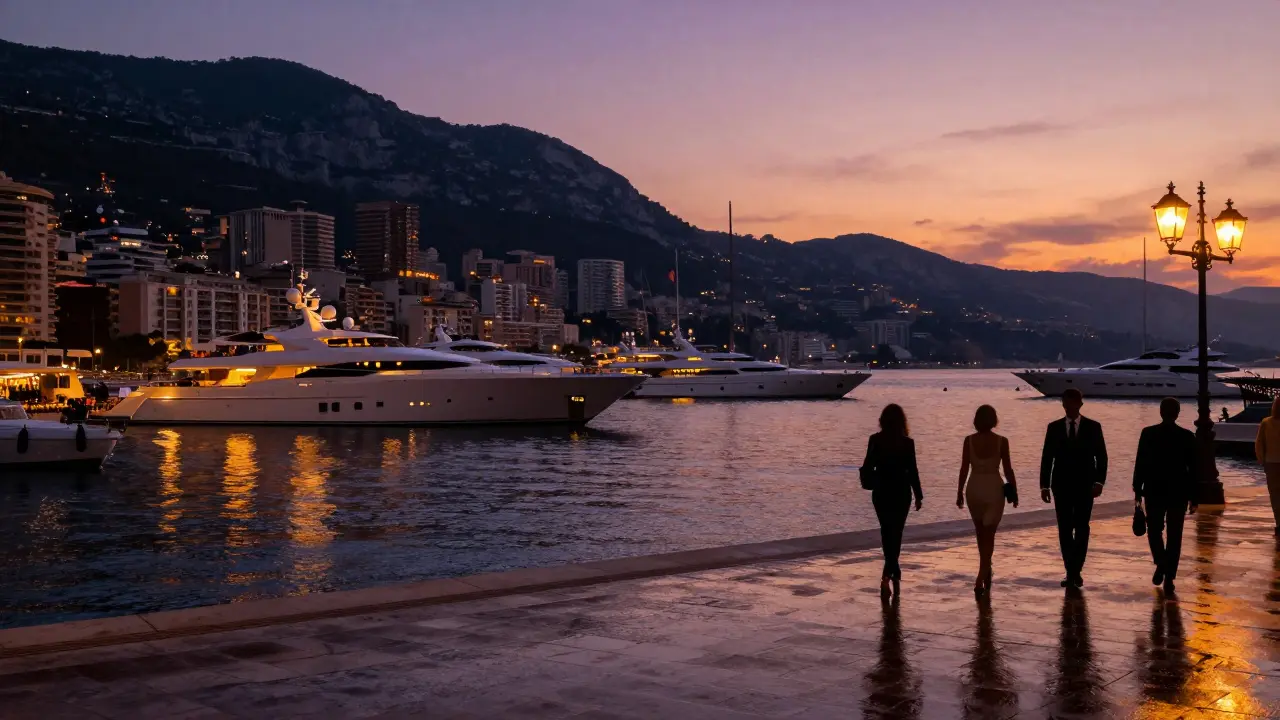
By 8 p.m., the yachts in Port Hercules are already lit up like floating jewelry boxes. By 10 p.m., the sidewalks of Monte Carlo are packed with people in tailored suits and sequined dresses, stepping over velvet ropes into places where a glass of champagne costs more than your taxi ride home. This isn’t just a party scene. This is Monaco’s rhythm-the heartbeat that kicks in when the sun dips below the Mediterranean horizon.
You won’t find dive bars or college hangouts here. There’s no such thing as "happy hour" unless you’re talking about a $400 bottle of Dom Pérignon. But if you want to experience nightlife that blends old-world elegance with high-stakes energy, Monaco delivers. It’s not about how loud the music is-it’s about who’s watching, who’s being seen, and how smoothly the night unfolds.
The transition: from dinner to dusk
Most nights in Monaco start at the table. Not just any table-think Le Louis XV at the Hotel de Paris, where Alain Ducasse serves truffle-infused risotto under crystal chandeliers. Or La Perle on the Rock, where the view of the harbor is as much a part of the meal as the lobster thermidor. Dinner here isn’t rushed. It’s a prelude.
By 9:30 p.m., the crowd thins out slightly. But the energy shifts. People check their watches, adjust their ties, and head toward the real show. The transition is quiet but deliberate. You don’t just "go out" in Monaco-you move from one world to another.
The club scene: where money meets music
There are three names that matter when it comes to Monaco’s clubs: Blue Bayou, Opal Club, and Le Ruhl.
Blue Bayou is the oldest. Opened in 1978, it’s where celebrities like Prince Rainier III used to sip cognac under palm trees. Today, it’s still the most discreet. No flashing lights. No DJs blasting bass. Just live jazz, velvet booths, and a crowd that doesn’t need to prove they’re rich-they already are. Cover? Around €150. But you’re not paying for the music. You’re paying for the silence between notes.
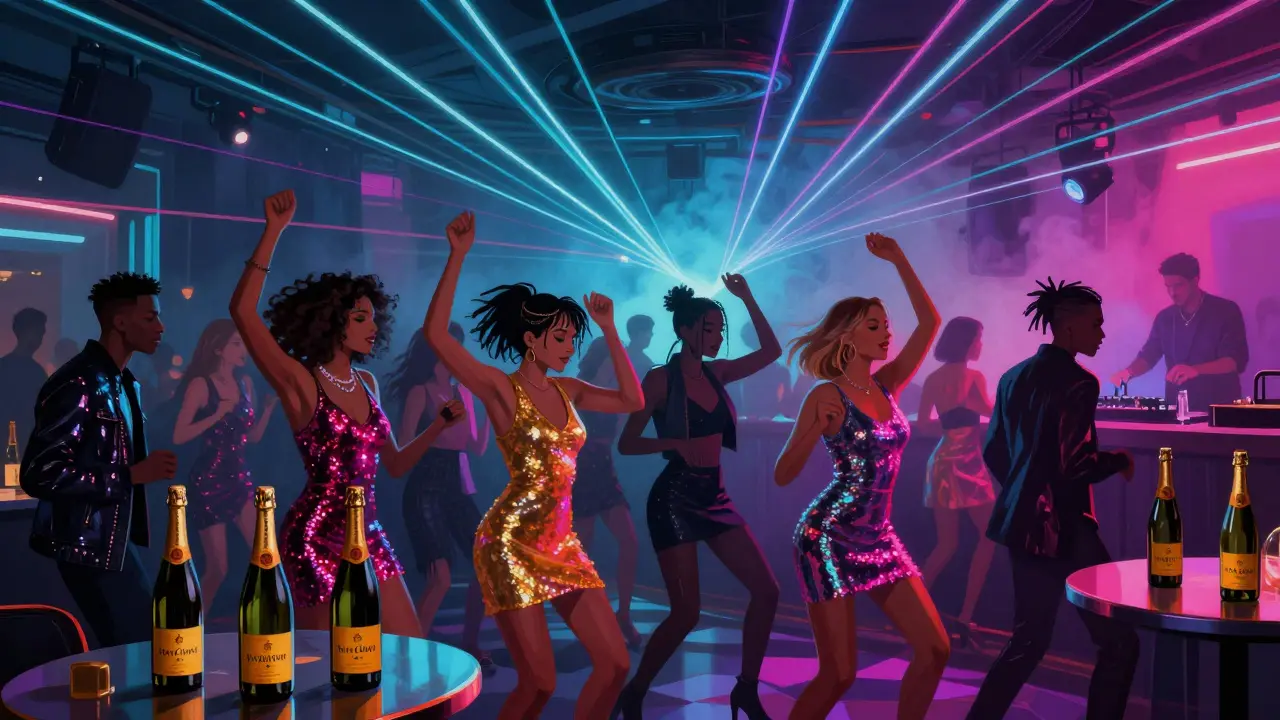
Opal Club is the opposite. It’s the kind of place where a DJ from Ibiza flies in just for a weekend. The dance floor is packed by midnight. The lighting changes every 30 seconds. Bottles of Veuve Clicquot are handed out like candy. This is where the young billionaires and social media influencers come to be photographed. If you want to see the future of Monaco nightlife, this is it.
Le Ruhl is the wildcard. Hidden behind an unmarked door on Avenue d’Ostende, it’s a members-only space that doesn’t advertise. You need a recommendation. Or a friend who knows the bouncer. Inside, it’s dim, moody, and packed with European aristocrats, tech founders, and a few spies-probably. The music? Rare vinyl from the 70s and 80s. No EDM. No pop. Just deep grooves that make you forget what year it is.
The rooftop ritual
Before the clubs, after dinner, before the club-there’s the rooftop. Monaco has more rooftop bars per square meter than any city in Europe. The best? Le Bar du Monte-Carlo at the Hôtel de Paris. It’s open to the public, but you need to dress like you belong. No sneakers. No shorts. No selfies on the railing.
Order a Negroni. Sit by the edge. Watch the lights of the Formula 1 circuit blink on as the night deepens. The sea glows below. The mountains rise behind you. And somewhere, a violinist is playing a Sinatra tune that no one’s dancing to-but everyone’s listening to.
There’s a reason people come back year after year. It’s not the drinks. It’s the feeling that you’re part of something rare. Something that doesn’t exist anywhere else.
The after-hours secret
Most people think the night ends at 3 a.m. But in Monaco, the real party starts at 4.
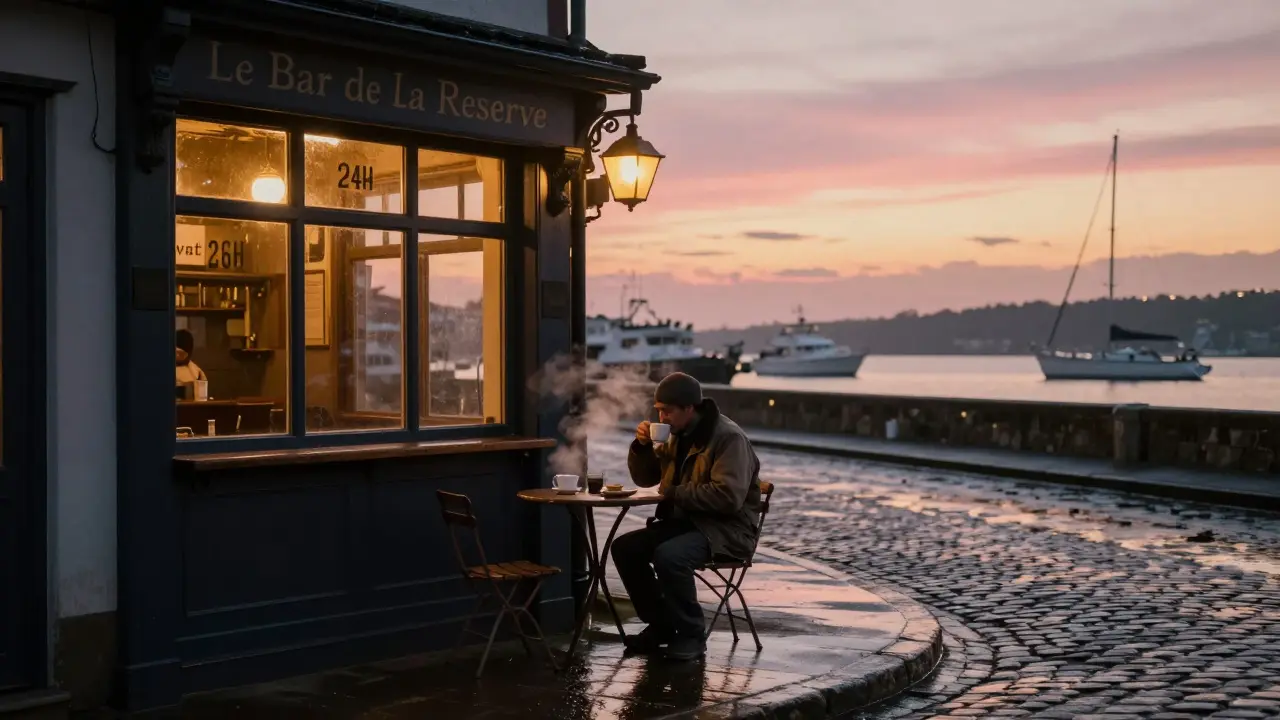
Head to Le Bar de la Reserve in the Fontvieille district. It’s open 24/7. No bouncers. No dress code. Just a few regulars-old money, retired sailors, and a chef from the south of France who makes the best grilled cheese in the Principality. The coffee is strong. The conversation is slower. And the sun rises over the harbor while you’re still talking about the last song played at Opal Club.
This is where the night ends-not with a bang, but with a sigh. A quiet moment between two worlds: the glittering spectacle and the quiet truth beneath it.
What to expect (and what to avoid)
Monaco’s nightlife isn’t for everyone. Here’s what you need to know before you go:
- Reservations are non-negotiable. Even if you’re staying at the Fairmont, you can’t just walk into Le Ruhl. Book a week ahead-or know someone who can.
- Dress like you mean it. No hoodies. No flip-flops. No baseball caps. If you’re not wearing a jacket, you’re not getting in.
- Don’t expect cheap drinks. A beer costs €18. A cocktail? €25 minimum. Water? €12. You’re paying for the view, the silence, and the aura.
- Don’t try to party like you’re in Ibiza. Monaco doesn’t do chaos. It does control. Even the dancing is elegant.
- Bring cash. Many places don’t take cards after midnight. Especially the private spots.
And if you’re thinking of showing up in a group of six with loud laughter and no plan? You’ll be politely asked to leave. Not because you’re rude-but because you don’t belong.
Who really goes here?
It’s not just celebrities. It’s not just tourists with credit cards.
There’s the Swiss banker who comes every Friday to listen to the pianist play Chopin. The Monaco-born artist who paints portraits of guests at Blue Bayou. The Russian oligarch who flies in for one night and leaves a €20,000 tip. The local fisherman who works the night shift and stops by Le Bar de la Reserve for a coffee and a cigarette before sunrise.
Monaco’s nightlife isn’t a performance. It’s a mosaic. Every person there has a story. And if you’re quiet enough, you’ll hear it.
When to go
Summer is peak. July and August are packed. But the best nights? May and September. The weather is perfect. The crowds are thinner. The energy is more relaxed.
Winter? Don’t skip it. December brings the Monaco Grand Prix, and the nightlife turns electric. January is quiet-until New Year’s Eve, when the entire harbor lights up with fireworks and champagne corks fly like confetti.
There’s no bad time to go. Just different versions of the same magic.
Final thought: It’s not about the club. It’s about the moment.
You won’t remember the name of the DJ. You won’t remember the exact price of your cocktail. But you’ll remember the way the sea looked at 3 a.m., the way the air smelled like salt and jasmine, the way someone you barely knew looked you in the eye and said, "This is the only place I feel alive."
That’s Monaco’s nightlife. Not loud. Not flashy. Not cheap. But unforgettable.
Is Monaco nightlife only for the rich?
Not exclusively, but it’s designed for those who can afford it. You can enjoy a rooftop drink for €25, or spend €1,000 on a bottle of wine. There’s no entry fee for the streets or the harbor views. But if you want inside the private clubs, you’ll need a reservation, a dress code, and cash. It’s not about being rich-it’s about respecting the space.
Can tourists visit Monaco’s nightclubs?
Yes, but not easily. Most clubs welcome tourists if they meet the dress code and have a reservation. Walk-ins are rarely accepted, especially on weekends. Your hotel concierge can help book tables-sometimes even get you past the line. Don’t rely on apps or websites; many spots don’t list their doors publicly.
What’s the best night to go out in Monaco?
Thursday and Saturday are the busiest. Friday is quieter but more elegant-ideal for Blue Bayou or Le Ruhl. Sunday nights are for locals and late-night coffee at Le Bar de la Reserve. Avoid Monday and Tuesday unless you’re looking for a quiet drink and no crowds.
Are there any free nightlife options in Monaco?
Absolutely. Walk along the harbor after 10 p.m. Watch the yachts light up. Sit on the steps of the Oceanographic Museum and listen to street musicians. The Prince’s Palace sometimes hosts free concerts in summer. The best nightlife isn’t always behind velvet ropes-it’s in the quiet moments between the parties.
How late do places stay open in Monaco?
Most clubs close at 3 a.m. But Le Ruhl and Opal Club sometimes stay open until 5 a.m. Le Bar de la Reserve is open 24 hours. The city doesn’t shut down-it just slows down. By 6 a.m., the streets are empty, the bouncers are gone, and the only people left are the ones who never left.

Write a comment