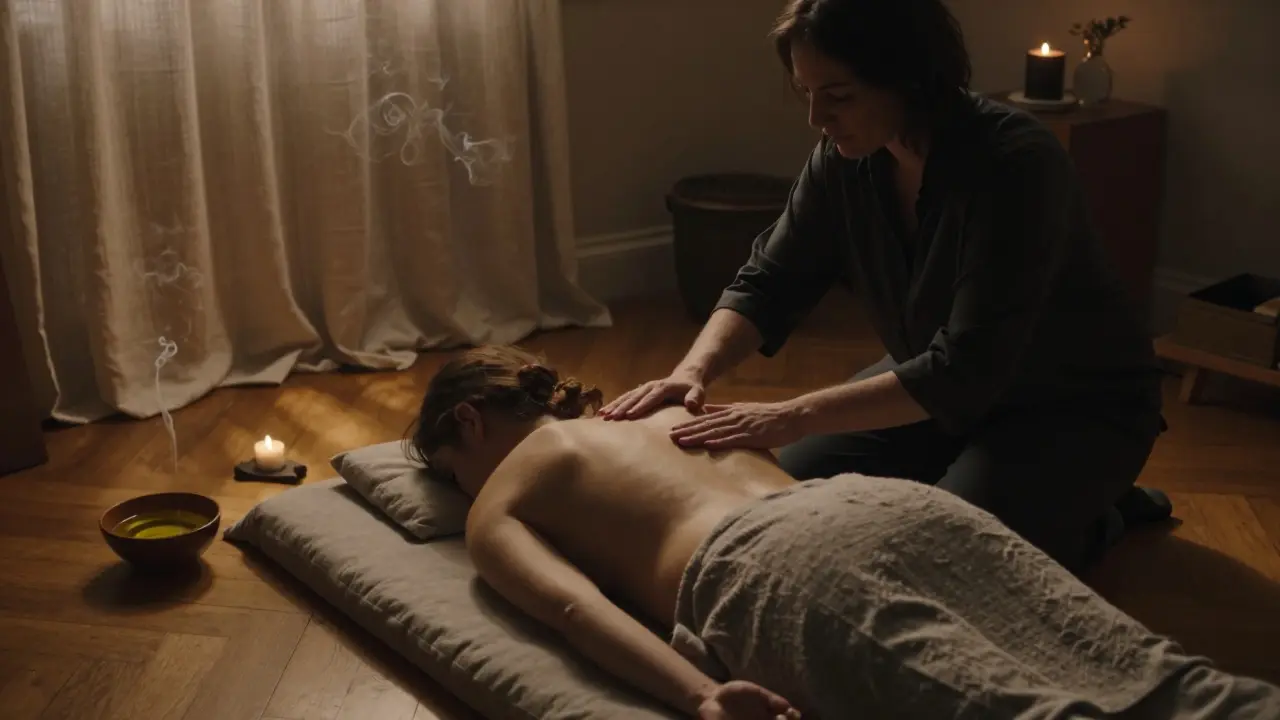
London’s sex massage industry isn’t just about physical release-it’s become a quiet hub for emotional and spiritual connection, and at the heart of that shift is tantra. You won’t find neon signs or street ads. Instead, you’ll find discreet studios in Notting Hill, quiet apartments in Chelsea, and private rooms above bookshops in Camden. These aren’t brothels. They’re spaces where touch becomes ritual, breath becomes medicine, and pleasure becomes a path-not an end.
Tantra Isn’t What You Think
Most people picture tantra as exotic, mystical, or overly sexualized. That’s not it. Tantra is ancient. It comes from Sanskrit roots meaning "to weave" or "to expand." For centuries, it was a spiritual practice in India, focused on awakening energy through breath, movement, and mindful touch. In modern London, it’s been stripped of dogma and repurposed-not as a religion, but as a tool for presence.What makes tantra different from a standard massage? In a typical sex massage, the goal is often orgasm. In a tantric session, orgasm is optional. The goal is connection. Deep, slow, intentional touch. Eye contact. Paused breathing. The client isn’t being serviced-they’re being held. And that changes everything.
One therapist in West London, who asked to remain anonymous, told me: "I’ve had clients cry during their first session. Not because of pain. Because no one had ever touched them without urgency before."
How Tantra Entered London’s Sex Massage Scene
Tantra didn’t arrive in London through yoga studios or spiritual retreats. It slipped in through the back door of adult wellness. In the early 2010s, a handful of therapists-many with backgrounds in psychology, somatic therapy, or bodywork-began offering sessions that blended massage with mindfulness. They didn’t call it tantra at first. They called it "sensual healing."By 2018, demand had grown. Clients weren’t just looking for sex-they were looking for relief from loneliness, anxiety, and emotional numbness. A 2023 survey by the London Bodywork Collective found that 68% of clients seeking tantric massage cited "feeling disconnected from my body" as their primary reason for booking. Only 12% said they wanted to climax.
Therapists started training in tantric techniques. Some studied with teachers in Goa. Others learned from European somatic practitioners. Today, there are at least 47 certified tantric massage therapists in London, most operating under the radar. Many don’t even list "tantra" on their websites. They use terms like "energetic bodywork," "sacred touch," or "conscious intimacy."
What Happens in a Session?
A typical session lasts 90 to 120 minutes. It begins with a conversation-no touch yet. The therapist asks about boundaries, trauma history, emotional needs. No judgment. No assumptions. Then, the room dims. Soft music plays. A warm oil is applied-not to seduce, but to ground.The massage starts with the back, then moves to the limbs. Slow strokes. Long pauses. The therapist might ask you to breathe into your belly. To notice where your tension lives. To say "no" if anything feels off. There’s no pressure to perform. No expectation to respond.
When the body is ready, attention shifts to the genitals. But not because the therapist wants to stimulate. Because the client needs to reconnect. The touch is light, rhythmic, almost indifferent. The goal isn’t arousal-it’s awareness. Many clients report feeling a deep warmth spreading through their pelvis, not from stimulation, but from being seen.
One client, a 42-year-old lawyer from Islington, said: "I came because I couldn’t orgasm with my partner anymore. I thought I was broken. The session didn’t fix me. But for the first time in years, I felt like my body wasn’t a problem to solve."
The Business Side: Legal, Ethical, and Hidden
Tantra massage exists in a gray zone. In the UK, prostitution is illegal if it involves payment for sex. But paying for touch-without explicit sexual acts-is not. That’s the loophole. Most tantric therapists avoid genital contact unless the client explicitly consents and the session is framed as therapeutic. Many don’t touch genitals at all.Therapists operate as independent contractors. They pay for studio rentals, insurance, and marketing. Some use platforms like Mindbody or Calendly. Others rely on word-of-mouth. Prices range from £120 to £280 per session. The most sought-after practitioners book out months in advance.
Regulation? None. There’s no governing body for tantric massage in the UK. No licensing. No standards. That’s both a freedom and a risk. Some therapists are trained in trauma-informed care. Others are self-taught. A 2024 report by the UK Bodywork Safety Network found that 31% of clients had experienced boundary violations in adult wellness settings-mostly from untrained providers posing as "tantric" practitioners.
That’s why reputable therapists now offer detailed consent forms, pre-session consultations, and clear exit protocols. They train in somatic ethics. They know how to spot dissociation. They understand that for some clients, this isn’t pleasure-it’s healing.
Who Comes to These Sessions?
It’s not just lonely men. It’s women who’ve never been touched without pressure. Non-binary people who feel invisible in sexual spaces. Couples who’ve lost intimacy. Veterans with PTSD. People recovering from sexual assault. Corporate burnout survivors.One therapist I spoke with had a client who came every two weeks after her divorce. She didn’t speak for the first three sessions. Just lay there, breathing. On the fourth, she whispered: "I forgot what it felt like to be held without needing to earn it."
Age? Mostly 30 to 55. Income? Above average. Education? Often college-educated. Many work in tech, finance, or healthcare. They’re not looking for a quick fix. They’re looking for a reset.
The Controversy: Is This Really Tantra?
Traditional tantric practitioners in India and Nepal would say London’s version is a watered-down, commodified version of their sacred tradition. And they’re not wrong. The spiritual core-deities, mantras, chakras, rituals-is mostly gone. What’s left is the bodywork. The presence. The slowness.But here’s the thing: Tantra was never meant to be locked in temples. It evolved. It traveled. It adapted. In the 1970s, it came to California. In the 1990s, to Berlin. Now it’s in London. It’s not the same as it was. But it’s still working.
People aren’t coming to worship Shiva. They’re coming because they’re tired. Tired of being performance-driven. Tired of being told what their body should want. Tantra, in this context, isn’t about spirituality. It’s about sovereignty. The right to feel pleasure without shame. To be touched without obligation.
What This Means for London’s Adult Wellness Scene
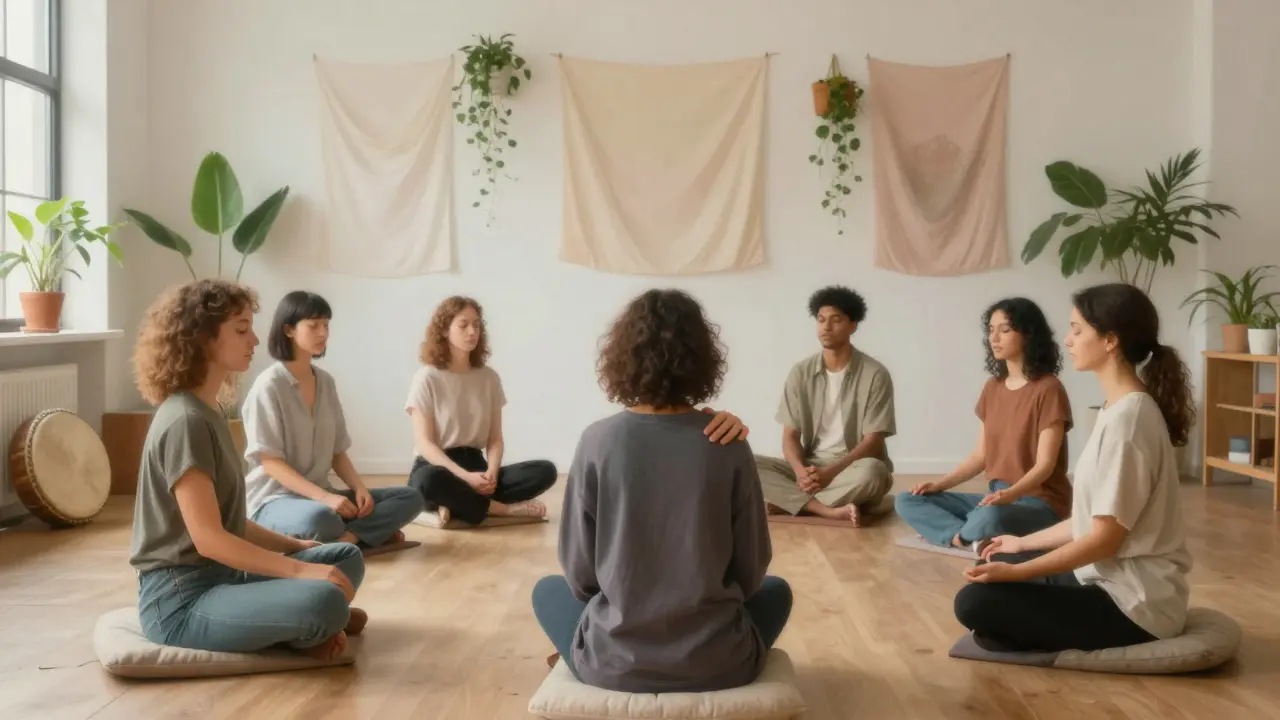
Tantra massage is changing how London thinks about sex and touch. It’s moving the conversation away from transaction and toward transformation. More therapists are integrating breathwork, trauma-informed practices, and emotional check-ins into their sessions. Some are partnering with psychotherapists. Others are offering group workshops on mindful touch.It’s also forcing a reckoning. If you’re going to charge £200 for a massage, you owe the client more than a body. You owe them safety. You owe them clarity. You owe them honesty.
The industry is slowly waking up. A new group, the London Tantric Ethics Collective, formed in late 2025. They’re creating voluntary standards: mandatory training hours, consent protocols, referral systems for trauma survivors. It’s not law. But it’s a start.
For the first time, people are asking: What does ethical pleasure look like? And the answer isn’t in a brochure. It’s in a quiet room. In a held breath. In a hand that doesn’t rush.
Is Tantra Massage Right for You?
If you’re curious, here’s how to start:- Look for practitioners who offer a free 15-minute consultation. If they don’t, walk away.
- Ask about their training. Did they study with a certified school? Who taught them?
- Check if they provide a written consent form. It should include boundaries, exit options, and emergency protocols.
- Don’t go if you’re seeking a quick orgasm. Tantra isn’t for that.
- Be honest about your trauma history. A good therapist will thank you for it.
And if you’re not sure? Try a non-sexual somatic session first. Many therapists offer full-body, non-genital touch sessions for £80. It’s enough to feel the difference.
Is tantra massage legal in London?
Yes, as long as no explicit sexual acts are exchanged for money. Tantra massage focuses on touch, breath, and presence-not intercourse or orgasm as a service. It operates in a legal gray area, but therapists who follow ethical guidelines avoid any activity that could be interpreted as prostitution under UK law.
How is tantric massage different from a regular sex massage?
A regular sex massage aims for sexual release-usually orgasm. Tantric massage aims for presence. It uses slow, intentional touch to help you reconnect with your body, not to achieve a physical outcome. Orgasm may happen, but it’s not the goal. The focus is on awareness, breath, and emotional safety.
Do I need to be spiritual to benefit from tantra massage?
No. While tantra has spiritual roots, the version practiced in London strips away religion. It’s about body awareness, emotional release, and mindful touch. You don’t need to believe in chakras or deities. You just need to be willing to slow down and feel.
Can couples do tantric massage together?
Yes, but not in the same session as a therapist. Some therapists offer couple’s workshops where partners learn to give each other mindful touch. These are usually group settings focused on communication, not sexual performance. Private couple’s sessions with a therapist are rare and typically not recommended unless both partners are working through intimacy issues with a trauma-informed professional.
How do I know if a tantric therapist is trustworthy?
Look for three things: a clear pre-session consultation, a written consent form, and transparency about training. Reputable therapists will never pressure you, will respect your "no," and will have experience working with trauma survivors. If they use vague terms like "energy work" without explaining boundaries, be cautious.
Are there risks to trying tantric massage?
Yes-if you go to an untrained provider. Some people experience emotional overwhelm, flashbacks, or confusion after a session. That’s why training in trauma-informed care matters. Always choose someone who asks about your history and gives you control. Avoid anyone who promises "spiritual awakening" or claims to "cleansing your energy." Those are red flags.
If you’ve ever felt like your body was a stranger to you, this might be the quietest way to come home.

Write a comment